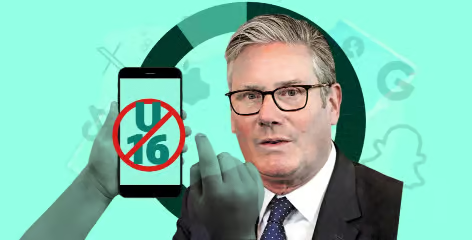
Debate has sparked up when Ex-Prime Minister Keir Starmer announced the under-16 social media ban on June 15, 2026. But is it still going ahead?
When the ban was announced, news spread like wildfire across social media, triggering a wave of outrage among teenagers. For many young people, it felt like an abrupt loss of their primary digital spaces with little room for compromise.
Teenagers nowadays are constantly on social media. According to Ofcom's Media Use and Attitudes Report, 97% of UK teens aged 13-17 have an active account or profile on social media, video-sharing or messaging platforms.
Why is social media being banned for U16S?
The ban was introduced following growing concerns over mental health and wellbeing among young people.
Government ministers and public health officials cited rising rates of anxiety, depression, body image issues, and self-harm among young people. Much of this was due to:
- Sleep Disruption: Widespread doomscrolling negatively impacts rest, school focus and mental health.
- Cyberbullying: Peer pressure, online harassment and exposure to idealised body standards.
The UK is essentially following Australia's lead after their under-16 ban at the end of 2025. By bringing in these rules, ministers are trying to set a clear boundary and change the idea that being on social media is just a normal part of growing up.
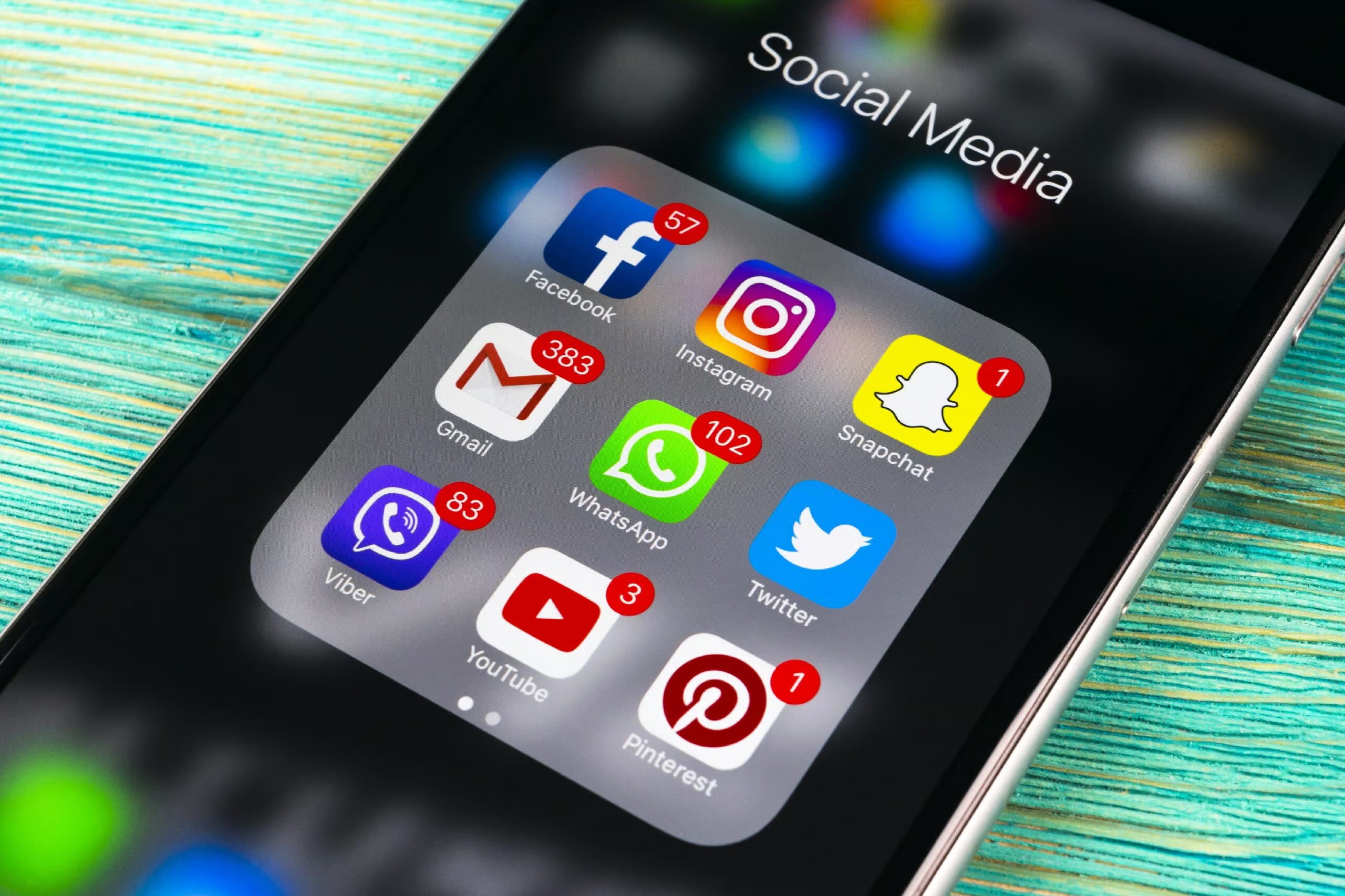
Social Media and Messaging Apps. Source: Scottish Athletics
How will the ban be carried out?
Under Ofcom's standards, simple check-boxes or self-declared birth dates are completely banned. Websites are using facial age estimation, using AI algorithms like Yoti or Persona to estimate the user's age based on facial micro-features. Apps and Websites may also use verification via Apple ID, Google Play or passkeys. The device securely passes a simple 16+ status badge to the app without sharing full identity details or passport scans.
Is there a bypass?
Yes, and tech-savvy teenagers are already exploiting them. One of the most popular ways is using a VPN. A VPN routes traffic through a server in another country (Like the Netherlands or Ireland); users are able to disguise their UK location and access normal, unblocked versions of apps.
Teens have also been buying or borrowing older accounts set up by family members.

Bypassing Restrictions with VPNs. Source: Anthony Jones Insurance Brokers
Is the verification safe?
There have been major debates about whether these verification systems are "safe". While providers claim their tools are secure, major independent reports and digital rights groups (such as Electronic Frontier Foundation and the Open Rights Group) argue that no current age verification is completely safe. Requiring millions of users to upload passports, driver's licenses, or credit cards creates massive databases of sensitive identity documents. If one of these vendors suffers a cyberattack, millions of pieces of personal data are exposed.
Has this actually ever happened?
Yes. Shortly after the requirement for age verification to access NSFW channels on Discord was rolled out, news broke that a third-party customer service vendor linked to Discord had been breached, exposing over 70,000 government IDs and customer support photos uploaded by users.
What apps are affected?
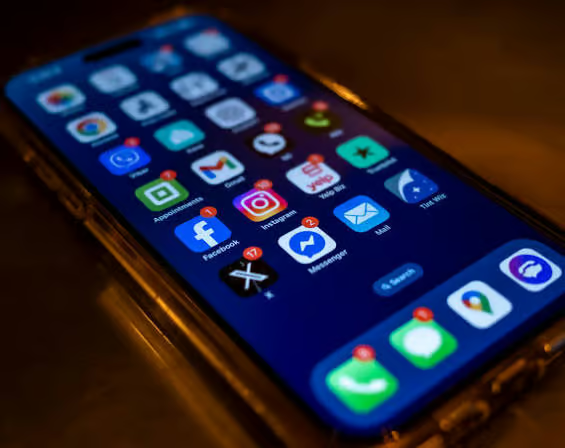
Mobile Apps Interface. Source: Pexels
Mainstream social media applications are subject to the Under-16 ban, specifically targeting "user-to-user services" that feature algorithms, infinite scrolling, autoplay videos or public discovery features.
A lot of the apps you might be using now are subject to the ban, such as:
- TikTok
- Snapchat
- X (formerly Twitter)
- Youtube
- Discord
- Twitch
Direct Messaging Services like WhatsApp, Signal and iMessage are exempt from the ban. Educational Tools like Teams, Duolingo and Google Classroom are also fully excluded.

Impact of Digital Stress and Online Harassment. Source: iStock
 0
0 0
0 0
0 0
0 0
0