

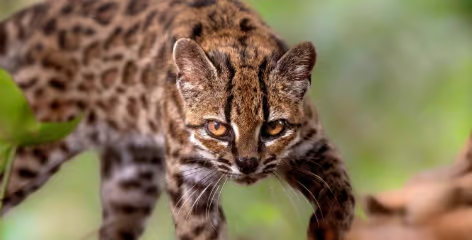
A small wild cat living in Bolivia’s cloud forests has been officially recognized as a new species marking the first time in more than a century that scientists have formally described a new living wild cat.
This new species is the Leopardus tilcayo. The cat is native to Bolivia’s Yungas region which is a mountainous area covered by forests. The species is attracting attention from visitors, although the individual that helped scientists make the discovery does not want to be in the spotlight.
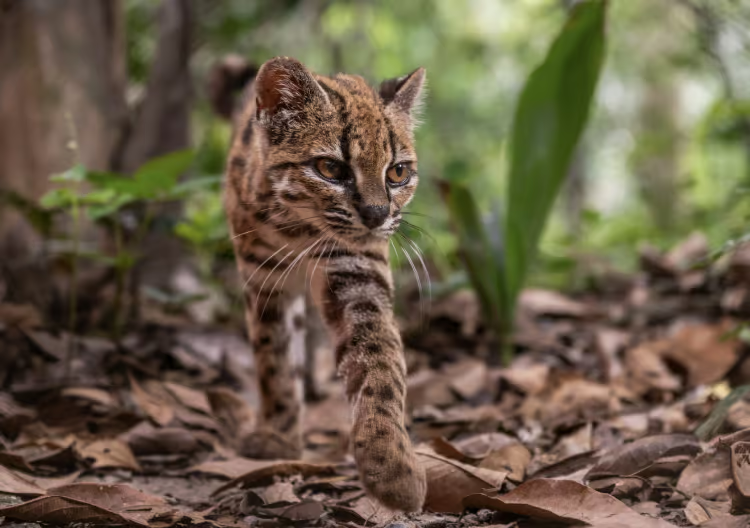
Tilcayo cat (Leopardus tilcayo) | Source: The New York Times
This cat, known as Tigrino, has lived at the Senda Verde Wildlife Sanctuary near Coroico since 2017. He was originally taken in by a local family who believed they had found a domestic cat. However, after keeping him for around a year, they realised that the animal was wild and brought him to the sanctuary instead.
Tigrino is very small. He measures around 46 centimetres from his head to the base of his tail and weighs approximately 1.4kg, making him smaller than the average house cat. His light brown coat is covered with irregular dark rosettes, while his small ears and long whiskers give him a rather different appearance from many other wild cats. His unusual appearance caught the attention of Bolivian biologist and National Geographic Explorer Paola Nogales-Ascarrunz. When she first encountered him, his characteristics did not seem to match descriptions of the tiger cats previously documented in Bolivia.
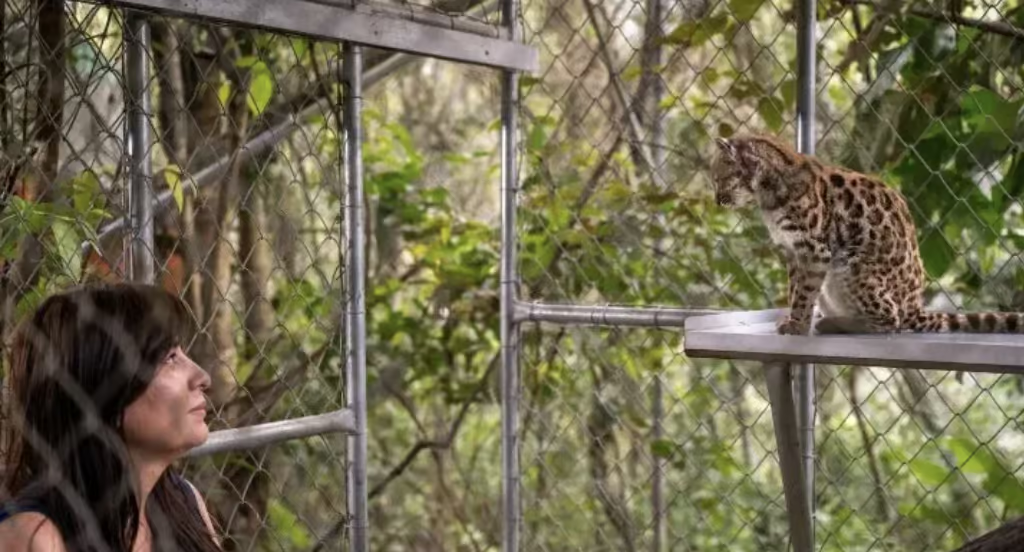
Paola Nogales-Ascarrunz studying the Tilcayo cat | Source: Dawn
An international team of scientists analysed genetic material from 38 tiger cats across South America and discovered that they actually belong to five genetically distinct species. Their research showed that Leopardus tilcayo separated from its closest relatives around 1.4 million years ago confirming it as a distinct species. Named after the term used by local Yungas communities, the Tilcayo remains poorly understood, with researchers using camera traps to learn more about its behaviour, diet and presence in the wild. However, the species may already face threats from deforestation, farming, fires and mining in the Yungas cloud forest.
Scientists have shared their findings with the IUCN, which will assess the different tiger-cat species separately to determine their conservation status. For now, Tigrino is the only known Tilcayo receiving care in captivity, with his discovery bringing greater attention to both the species and the need to protect its natural habitat.
 0
0 0
0 0
0 0
0 0
0