

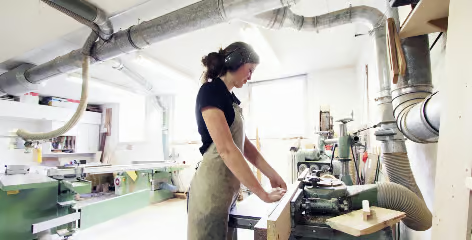
Trade has historically been a male-dominated career, but over the past 30 years, more women have entered the trades. Despite this increase, the percentage remains low: women make up 15% of the construction workforce, and only 2% hold on-site trade roles. Some women may have concerns about working in trades due to lingering outdated attitudes. While these attitudes persist, they are less prevalent than in the past.
Many tradespeople are now welcoming, and reports indicate that issues are taken seriously if they arise. Concerns about customers not taking them seriously also persist, but they are often unfounded. In fact, many domestic customers, especially women living alone, specifically request female tradespeople to feel safer.
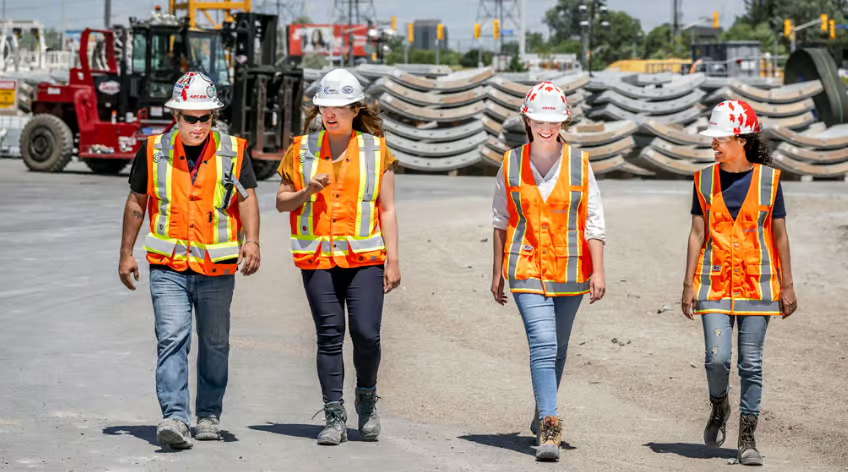
Women in trade program | Source: Canadaconstruct.com
The UK has many initiatives and organisations that support women in trade. An example of this is Women into Construction (WIC), which offers free training courses, real-world work placements, and one-on-one employment support specifically designed to help women move into construction trades. Buildher by Places for People is another organisation for 13- 16-year-olds that introduces young women to hands-on skilled trades and provides pathways into a property maintenance apprenticeship.
These initiatives are important because they directly address a massive gender gap, help solve economic challenges and create a better career path for women. They solve the skilled labour shortages; they are good for economic empowerment and financial independence. It also creates inclusive and safer workplaces - having more women on site helps dismantle outdated stereotypes and reduces workplace harassment.
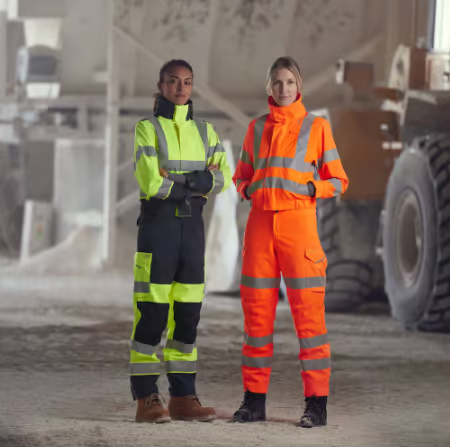
PPE that fits | Source: enfieldsafety.com
Overall, women make up roughly 15% of the total UK construction workforce. Out of roughly 2 million workers in the sector, around 305,000 are women. Roughly 1 in 100 women account for 1% to 2% of manual tradespeople. The vast majority of women in the sector work in office-based administration, design or professional management roles. A detailed breakdown shows which manual trades have slightly higher female representation and which remain heavily male-dominated.
8.34% make up painters and decorators, which is approximately 8,200. 1.73% to 8.58% make up electrical/electronic trades, which is approximately 7,300. 2.03% make up plumbers and heating engineers, approximately 15,000 across the country. 0.68% make up carpenters and joiners. Nearly zero measurable female representation for bricklaying, tiling and welding.
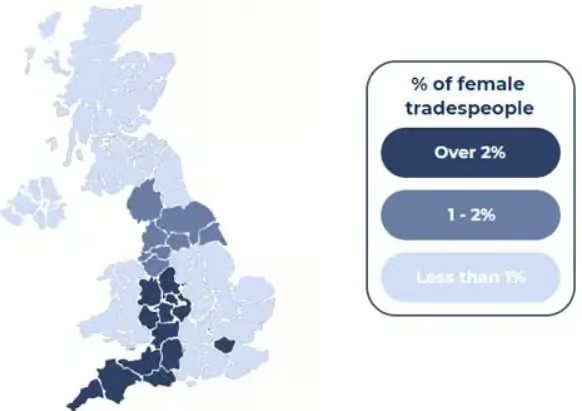
The growing demand for tradeswomen | Source: mylocaltoolbox.co.uk
This may raise a question in your mind: Why are the percentages so low? 60% of construction firms fail to provide PPE explicitly tailored for women. Ill-fitting PPE is linked to more than 20% of on-site female injuries. 67% of women in the sector report experiencing some form of gender discrimination, and 37% lack a female manager or senior mentor on site. There is also a pay gap, which sits at 23.7%. However, for those who stay successfully in the purely skilled trades, the gap narrows substantially to about 3%, because trade work is heavily priced per job or set by standard skill rates.

Paygap Infographic | Source: wage-equality.com
There is a sign of future momentum for women who have a love for trade. Women now make up over 15% of new entrants into construction apprenticeships, compared to less than 10% a decade ago. Recent recruitment tracking also shows that 66% of young women state they are openly willing to consider a career in construction if given the right pathway. This shows there is hope for women in trades.
As more organisations, schools, and employers invest in mentorship and outreach programs, barriers continue to break down. Highlighting the achievements of women already thriving in trades can inspire others to pursue these careers. Increased visibility and support networks help create workplaces where women feel welcomed and valued. If these positive trends continue, the construction industry will benefit from a richer talent pool and a more inclusive culture.
 0
0 0
0 0
0 0
0 0
0